…Records 38,242 Arrests, 5.8m Kg Drugs Seized, 6,232 Convictions*
The National Drug Law Enforcement Agency (NDLEA) has showcased Nigeria’s transformation in drug control as a model for how institutions can adapt to evolving criminal threats and deliver results.
The presentation was made at the ongoing 81st Session of the United Nations General Assembly in New York, United States, during a session themed “Restoring Trust, Managing Transformation: A United Nations that Delivers for All.”
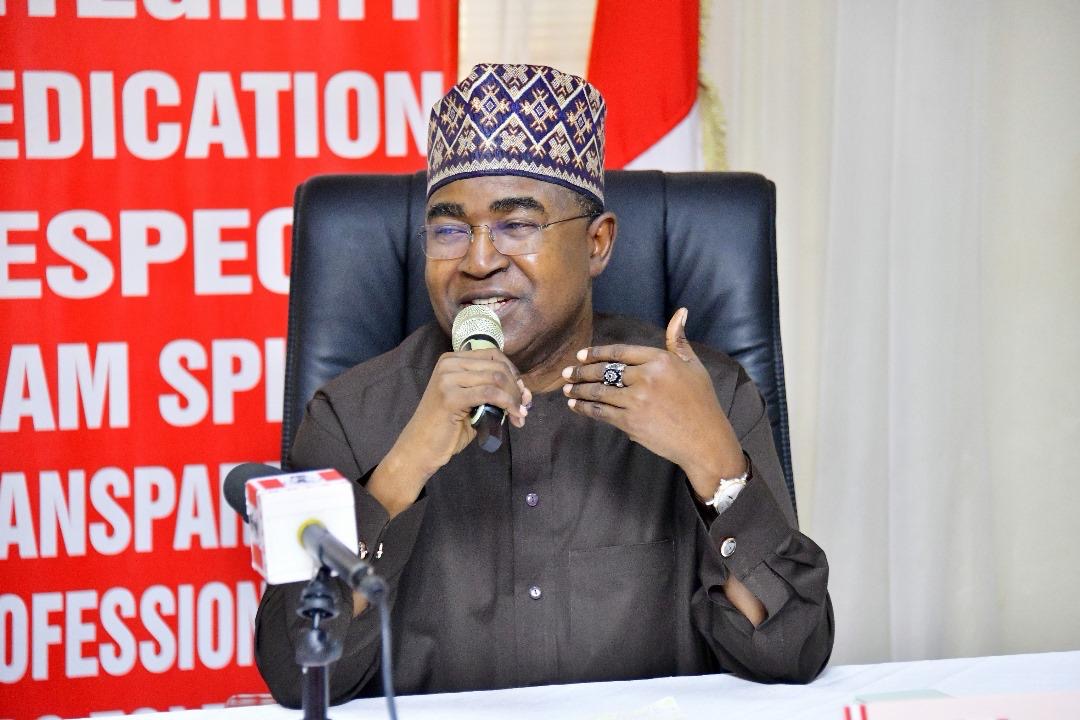
Nigeria’s statement was delivered on Monday, October 12, 2026 by the Secretary of the Agency, Shadrach Haruna, who represented the Chairman/Chief Executive Officer of NDLEA, Brig. Gen. Mohamed Buba Marwa (Rtd).
According to Haruna, NDLEA has evolved from a predominantly enforcement-focused organization into an integrated, intelligence-led and people-centred institution that combines law enforcement, public health, technology, financial investigation, alternative livelihoods and international cooperation.
He explained that the shift was driven by changing threats, noting that trafficking networks have become more sophisticated, technology has opened new channels for illicit activities, while criminal proceeds move rapidly across borders.
“Nigeria therefore broadened its focus from drugs and offenders alone to the criminal networks, illicit profits and vulnerabilities that sustain the drug economy,” he told the Assembly.
The NDLEA scribe disclosed that the new strategy has produced remarkable results in both drug supply and demand reduction.
According to him, between January 2025 and September 2026, the Agency recorded *38,242 arrests; seized more than 5.8 million kilograms of illicit drugs valued at over N2.5 trillion; and secured 6,232 convictions.*
Within the same period, over 16,303 persons received counselling, treatment or rehabilitation, while prevention and sensitization activities reached millions of Nigerians.
Marwa stressed that Nigeria’s emphasis is now on dismantling major traffickers, organized structures and financial networks behind the drug trade, rather than measuring performance solely by arrests and seizures.
He also highlighted the Alternative Development initiative currently being piloted in three communities in Ondo State, where residents are being supported to transition from illicit cannabis cultivation to legitimate agricultural production.
He noted that sustainable drug control requires more than removing an illicit crop, but demands credible economic alternatives that strengthen food security, community resilience and national security.
The NDLEA Chairman cited the Agency’s Drug Integrity Test and Visa E-Administration System as examples of how digital tools can improve accessibility, efficiency, transparency and integrity in public administration.
He said the reforms are being consolidated in the National Drug Control Master Plan 2026-2030, which covers six pillars: drug supply reduction; drug demand reduction; access to controlled medicines; governance and coordination; alternative development; and disruption of the illicit drug economy.
Nigeria, however, called on the international community to strengthen timely intelligence-sharing so criminal networks cannot exploit gaps between jurisdictions; intensify action against illicit financial economy through financial investigation, asset tracing and recovery; strengthen prevention, treatment and rehabilitation alongside effective enforcement; and expand support for Alternative Development.
Nigeria also urged support for capacity development of law enforcement officers to match the sophistication of drug cartels and investment in institutions in developing countries through technology, training, forensic capability and sustained technical assistance.
The country described its experience as a continuing journey, not a finished model, and affirmed its readiness to share lessons and work with Member States and international partners to move from commitment to implementation.