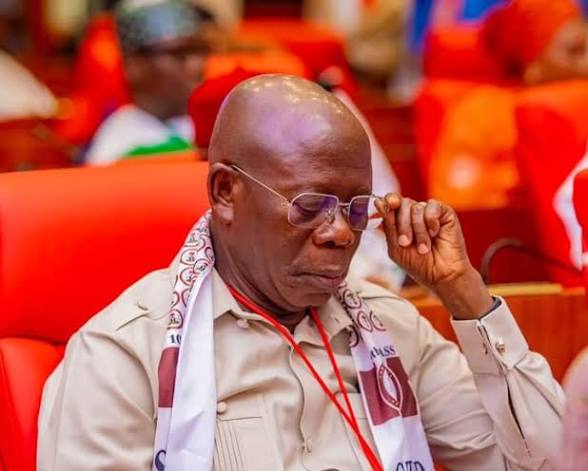
When Senator Adams Oshiomhole stood up and alleged that ₦210 trillion in oil revenues cannot be accounted for by the Nigerian National Petroleum Company Limited, NNPCL, he touched Nigeria’s rawest nerve: trust.
Whether the final figure settles at ₦210 trillion, a fraction of it, or something else entirely, one fact is not in dispute — Nigeria is bleeding. Citizens in Abuja, in Zamfara, in Oyo, and across the country wake up daily to fuel prices that bite, power that flickers, and hardship that tightens its grip. In that context, any credible allegation of unaccounted public funds cannot be treated as politics-as-usual or “swept under the tiles.”
*The scale demands attention*
₦210 trillion is not pocket change. It dwarfs several years of federal budgets. It’s more than what we spend on education, health, roads, and security combined over multiple budget cycles. If even a portion of that sum is missing or poorly tracked, it represents a direct economic loss — money that should be building hospitals, fixing roads, paying teachers, and securing communities.
Oshiomhole’s call for accountability from NNPCL is therefore not a partisan attack. It is a demand every well-meaning Nigerian should stand with. Accountability is not about personalities. It’s about the contract between government and citizens: that public resources will be managed transparently for public good.
*Why this cannot be ignored*
Three reasons:
1. *Economic survival*: Nigeria’s fiscal space is shrinking. We borrow to fund budgets while subsidy savings and oil revenues should be giving us breathing room. Unanswered questions about trillions create a credibility gap that scares investors and weakens the naira.
2. *Moral injury*: When people struggle to feed their families but hear of trillions “unaccounted for,” cynicism grows. That cynicism kills civic participation faster than any opposition party can.
3. *Precedent*: Every time a big claim is buried in press releases and counter-statements without independent audit, we teach the next generation that opacity pays. Democracy cannot grow in that soil.
*What accountability should look like*
NNPCL must welcome scrutiny, not dismiss it. An open, independent audit by credible firms, with findings made public, is the minimum. The National Assembly, civil society, and the media must follow the money line-by-line. And if there are gaps, Nigerians deserve to know what happened, who was responsible, and what will be recovered.
This is not about “bringing anyone down.” It’s about building Nigeria up. Nations that thrive are those where no institution, no matter how strategic, is above questions.
I stand with the call for answers. You should too. Not because we enjoy scandal, but because Nigeria cannot afford another lost decade to unanswered questions while our people endure hardship.
The tiles of our democracy are already cracked by poverty and insecurity. Sweeping ₦210 trillion under them will only make the cracks wider.
As we celebrate Democracy Day, let accountability be our gift to ourselves. The future of City Centre Ward, of Abuja, and of Nigeria depends on it.
Abel Lazarus
Publisher, The Alimosho Mail Newspaper