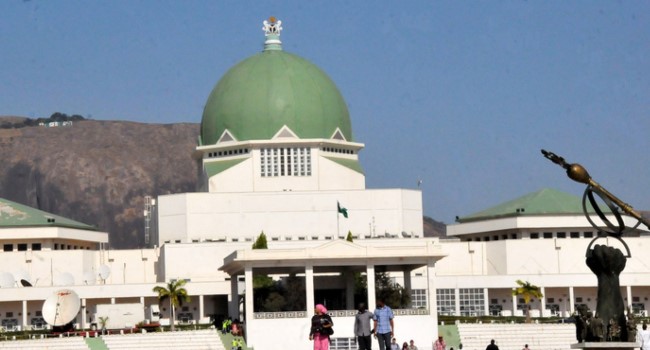
The National Assembly has transmitted the Constitution Alteration Bill seeking the establishment of State Police to the 36 State Houses of Assembly for consideration and approval.
The transmission was effected on Wednesday, September 16, 2026, by the Clerk to the National Assembly, Kamoru Ogunlana, pursuant to Section 9 of the 1999 Constitution (as amended) and on the directive of the leadership of the National Assembly.
Ogunlana, in a statement, said the bill transmitted is the Constitution of the Federal Republic of Nigeria, 1999 (Sixth Alteration) Bill, 2026 — the State Police Establishment Bill — being the only constitutional alteration bill that has so far been passed by both the Senate and the House of Representatives in the current exercise.
With the transmission, the National Assembly has asked the state legislatures to consider the bill in accordance with their respective legislative procedures and communicate their resolutions to the National Assembly upon conclusion of deliberations.
The Clerk said the Assemblies have been given a 30-day window to respond, but clarified that the timeframe is administrative and not a constitutional deadline.
“The Constitution does not prescribe a specific period within which State Houses of Assembly are required to communicate their resolutions,” Ogunlana said, adding that the 30-day period is intended to ensure an “orderly, coordinated and timely conclusion” of the alteration process.
By constitutional provision, the bill cannot become law with federal parliamentary approval alone. Under Section 9, at least two-thirds of the 36 State Houses of Assembly — 24 states — must concur before it can be transmitted to President Bola Ahmed Tinubu for assent.
The State Police Bill originated as an Executive Bill from President Tinubu. The Senate passed it on June 24, 2026, after receiving it on June 23, while the House of Representatives passed the executive version on July 23, 2026, after rescinding its earlier version passed on June 11.
The development puts state lawmakers at the centre of what is considered one of the most consequential reforms to Nigeria’s security architecture since the return to civil rule in 1999.
If approved by 24 states and assented to by the President, the amendment will decentralise policing and allow states to establish their own police services alongside the Nigeria Police Force.